This independent guide is based on the brand's published product information. Laokshop may earn a commission when a reader visits the official product page through our link.
A bathroom can look clean and still feel rough to the touch. The tub has a faint ring. The shower glass has a hazy sheet near the bottom. The tile is dull between the grout lines. These are the small signs that soap, minerals, and water have left a film behind.
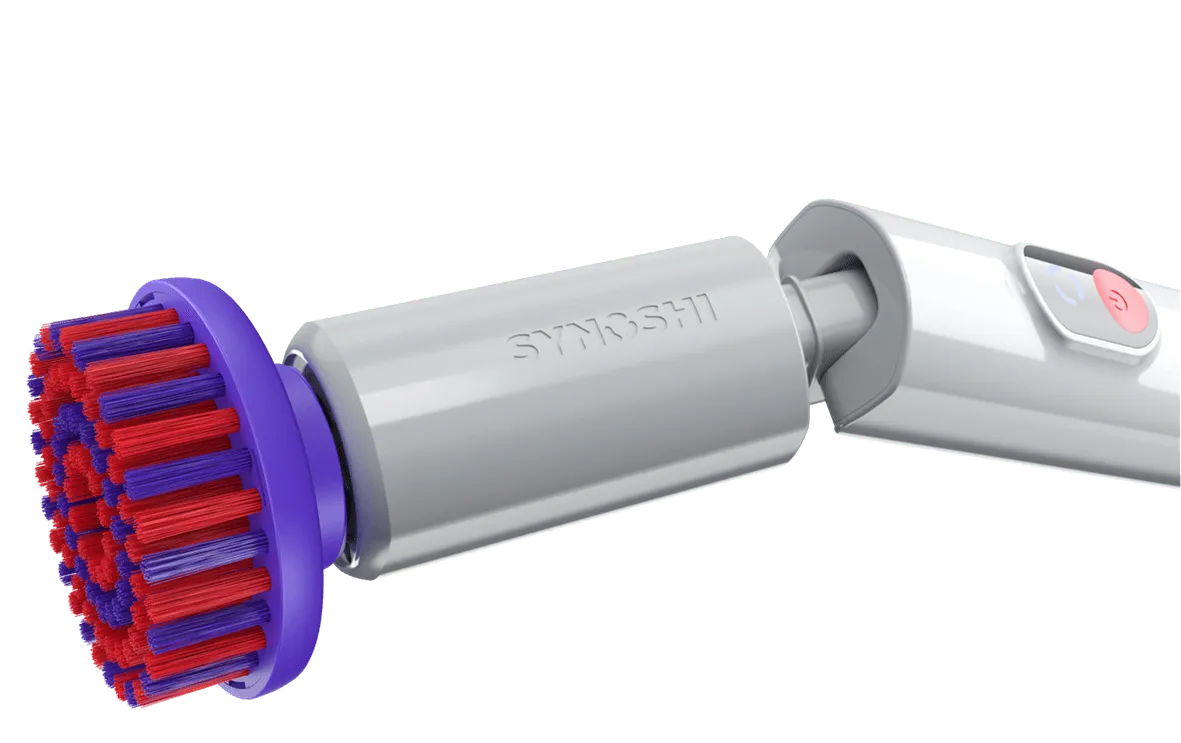
Synoshi Pro is designed for the kind of scrubbing these areas often require. It is a cordless handheld tool with a rotating brush head and a handle that tilts through three positions. Instead of powering each stroke with your wrist and shoulder, you guide the tool and let the motor create the motion.
That does not remove the need for a cleaner that suits the surface. A powered brush is just one part of a bathroom cleaning routine. The product’s usefulness depends on the surface, the attachment, and the amount of buildup.
Understand what soap scum actually is
Soap scum is usually a mixture of soap residue, body oils, minerals from water, and other materials that settle on a surface. Hard-water spots are largely mineral deposits. They may look similar when they dry, but the best cleaning response can differ.
This is why a single brush setting is rarely the whole answer. A cleaning product designed for soap scum or hard water can help loosen the buildup. A textured brush can help lift the loosened residue. A gentle pad may be more appropriate on a delicate surface. And water temperature and dwell time can matter as much as the tool.
Before using Synoshi Pro, read the cleaner label and the product instructions. Avoid mixing cleaning chemicals, and make sure the cleaner is appropriate for the material being cleaned. A scrubber increases physical action, but it does not make an unsafe combination safe.
Use the correct brush for the surface
Synoshi Pro’s interchangeable heads are a useful part of the design. A firmer brush may be suitable for textured tile or grout, while a softer attachment may be more appropriate for glass, plastic, or a smooth fixture.
The official product page describes a three-angle tilt intended to help reach awkward shapes. That is particularly helpful around a shower door frame, the curve of a tub, or the base of a faucet. The tool’s IPX5 water-resistance rating means it can handle splashes, but it is not a reason to submerge it or ignore the manufacturer’s care instructions.
Test a small area first. This is especially important on acrylic tubs, coated shower glass, painted metal, natural stone, and any surface you are not sure about. A brush that feels gentle in the hand can still leave fine marks if it is used with too much pressure or on the wrong finish.
The five-step cleaning routine
For a controlled bathroom cleaning session:
- Remove loose dust, hair, and visible debris from the area.
- Apply a cleaner that suits the surface and let it work according to its label.
- Start with the gentlest suitable brush and moderate pressure.
- Move in overlapping sections along the tub edge, glass, tile, or grout.
- Rinse thoroughly and dry the area so the result is visible.
Do not press down as though the motor needs help. Let the rotating head do the work. Keeping the tool moving helps avoid polishing one spot too aggressively. If a patch does not improve, the issue may be a buildup that needs more dwell time or a different cleaner rather than more force.
Where the tool is likely to help
Synoshi Pro is most intuitive for larger flat or gently curved surfaces where hand scrubbing becomes tiring: the inside of a tub, the lower section of shower glass, ceramic tile, sink bowls, and the edges around fixtures. A handheld spin brush can also make it easier to work while standing rather than kneeling for a long time.
It is less useful as an automatic answer for delicate surfaces, loose grout, heavily chipped enamel, or areas where a brush cannot reach. A narrow hand brush may still be better for intricate trim. A squeegee remains useful for routine shower-glass drying, and a normal mop or cloth may be quicker for large floors.
The product’s broader value is to replace repeated back-and-forth scrubbing with a guided cleaning motion in places where that motion saves meaningful effort. That makes it a practical household tool, not a magic eraser.
A realistic result is the best result
The finished bathroom should look bright and feel cleaner, but it does not need to look as if no one has ever used the tub. Water minerals and aging surfaces can leave permanent texture. A powered scrubber can improve the surface without removing the signs of normal wear.
That is why maintenance matters. A quick regular clean with the tool, the right cleaner, and a towel-dry after showers often makes more sense than waiting for the shower glass to become opaque and then scrubbing with maximum force. Use the tool as part of a routine, not as a rescue operation every time.
Bottom line
Synoshi Pro is worth considering for bathroom surfaces that need more motion than your wrist wants to provide. Its interchangeable heads, tilting handle, and cordless design suit tubs, tile, glass, and sink areas, while the IPX5 rating simplifies cleaning around splashes.
The product does not choose the cleaner, replace appropriate surface care, or guarantee that every stain will disappear. Start with the right test area, use moderate pressure, and compare the finished result with the product’s official care guidance.
If the tool matches the surfaces and cleaning routine in your home, review the current Synoshi Pro offer and latest instructions directly. Laokshop may earn a commission from qualifying purchases.
Common questions
Can Synoshi Pro remove all soap scum?
Results depend on the cleaner, water hardness, how long buildup has been present, and the brush attachment. A scrubbing tool can reduce manual effort but is not a guarantee of a mark-free surface.
Which surfaces should I test first?
Test a small area on glass, acrylic, coated metals, natural stone, and painted fixtures before using a brush around the whole surface.
Is the tool waterproof?
Synoshi Pro lists an IPX5 water-resistance rating. That is not the same as being designed for complete submersion, so follow the official care instructions.
Source: Synoshi Pro official product page. Checked November 14, 2026.
Cleaning results depend on the surface, cleaning product, brush attachment, and technique used. Always test delicate or coated surfaces in a small area first.